VMO Strengthening Exercises: A Comprehensive Guide
Navigating the world of VMO strengthening can be complex, and readily available PDF resources offer structured guidance for effective training programs.
Many downloadable guides detail exercises, progression strategies, and crucial form tips, ensuring safe and optimal results for all fitness levels.
JCPenney associates and individuals alike can benefit from these resources, finding clarity on techniques and routines to enhance knee stability and overall performance.
These PDFs often include visual aids and detailed instructions, making it easier to understand and implement the exercises correctly, minimizing the risk of injury.
Exploring these readily accessible documents empowers users to take control of their VMO strengthening journey, achieving lasting improvements in knee health.
Understanding the VMO Muscle
The Vastus Medialis Obliquus (VMO) is a crucial quadriceps muscle often overlooked, yet vital for knee stability and proper function. It’s the teardrop-shaped muscle located on the inner side of your knee, playing a significant role in patellar tracking – ensuring your kneecap moves smoothly within its groove.
A strong VMO prevents the kneecap from drifting laterally, reducing the risk of pain and injury. Many VMO strengthening exercises, detailed in downloadable PDFs, focus on isolating and activating this specific muscle group. These resources often emphasize the importance of proper form to maximize VMO engagement.
Understanding its anatomy and function is key to performing exercises effectively. PDFs frequently illustrate the VMO’s location and explain its role in various movements. Weakness in the VMO can contribute to conditions like patellofemoral pain syndrome (runner’s knee) and knee instability. Therefore, targeted strengthening, guided by reliable PDF resources, is often a cornerstone of rehabilitation and preventative care.
These guides provide a comprehensive understanding of the VMO, empowering individuals to address imbalances and optimize knee health through focused exercise programs.
Why VMO Strengthening is Crucial
VMO strengthening is paramount for maintaining knee joint integrity and preventing a cascade of potential issues. A strong VMO directly impacts patellar tracking, minimizing abnormal movement and reducing stress on the knee cartilage. Downloadable PDF exercise guides highlight this connection, emphasizing exercises designed to improve this crucial function.
Weakness in the VMO can lead to various problems, including patellofemoral pain syndrome, IT band syndrome, and even ACL injuries. PDFs often detail how targeted VMO exercises can act as a preventative measure, bolstering knee stability during athletic activities and daily life.
These resources demonstrate how a properly strengthened VMO contributes to improved balance, agility, and overall lower body performance. They often include progressions, allowing individuals to gradually increase the challenge as their strength improves. Investing time in VMO strengthening, guided by reliable PDF resources, is an investment in long-term knee health and functional movement.
Assessing VMO Weakness
Identifying VMO weakness is the first step towards targeted strengthening. Many VMO strengthening exercise PDFs include self-assessment tests to help individuals gauge their current VMO function; These tests often involve observing for patellar tracking issues during simple movements like squats or lunges.
A common indicator is a “V” shaped quad muscle appearance, where the inner teardrop-shaped VMO appears smaller or less defined than the outer quadriceps muscles. PDFs often provide visual comparisons to aid in this assessment. Functional tests, detailed in these guides, may involve single-leg stance stability and observing for inward knee collapse.
Professional assessment by a physical therapist is ideal, but these PDF resources offer a valuable starting point for self-awareness. Recognizing subtle signs of weakness allows for proactive intervention, preventing minor issues from escalating into more significant knee problems. Utilizing these guides empowers individuals to understand their body and address potential imbalances.

Warm-Up Exercises for VMO Activation
VMO strengthening exercise PDFs emphasize preparing the muscles with dynamic warm-ups, focusing on gentle activation before intense exercises to prevent injury.
These routines prime the VMO for optimal performance and engagement.
Quadriceps Sets
Quadriceps sets are a foundational exercise frequently detailed in VMO strengthening exercise PDFs, serving as an excellent starting point for activation. This isometric exercise involves sitting or lying with your leg extended and consciously contracting the quadriceps muscle, specifically focusing on squeezing the VMO.
The key is to push the back of your knee down towards the floor, tightening the muscle without actually moving the leg. Hold this contraction for 5-10 seconds, then relax. Repeat 10-15 times for several sets.
PDF guides often highlight the importance of proper form – ensuring the contraction is isolated to the quadriceps and avoiding any hip or glute engagement. Visual cues, like imagining pulling your kneecap upwards, are often included. This exercise is beneficial because it requires no equipment and can be performed virtually anywhere, making it highly accessible.
It’s a gentle yet effective way to begin re-establishing the mind-muscle connection with the VMO, preparing it for more challenging exercises.
Hamstring Curls (as a preparatory exercise)
While seemingly counterintuitive, hamstring curls are often included in VMO strengthening exercise PDFs as a crucial preparatory step. Strengthening the hamstrings helps establish a balanced muscle activation pattern around the knee joint, indirectly supporting VMO function.
PDF resources emphasize that a strong hamstring group contributes to overall knee stability, preventing imbalances that can inhibit VMO activation. These curls can be performed using resistance bands, cable machines, or dedicated hamstring curl equipment.
Focus on controlled movements, avoiding momentum, and squeezing the hamstring muscles throughout the exercise. Typically, 3 sets of 10-15 repetitions are recommended.
The rationale behind this approach is that addressing hamstring weakness can improve overall lower limb mechanics, creating a more favorable environment for VMO strengthening. It’s about building a solid foundation before directly targeting the VMO.
VMO-Focused Exercises – Beginner Level
Beginner-level PDFs prioritize foundational movements, gently activating the VMO without excessive strain. These exercises build a base for progressive overload and improved knee control.
Terminal Knee Extensions (TKE) with Resistance Band
Terminal Knee Extensions (TKE) are a cornerstone VMO exercise, frequently detailed in comprehensive strengthening PDFs. This exercise specifically targets the VMO during the final 20-30 degrees of knee extension – the range where it’s most active.
To perform TKE, secure a resistance band around your ankle and anchor it firmly. Stand with a slight bend in your knee, then slowly straighten your leg, focusing on fully extending the knee against the band’s resistance.
PDF guides emphasize maintaining proper form: keep your core engaged, avoid locking your knee, and concentrate on feeling the VMO muscle contracting. Start with lighter resistance and gradually increase it as your strength improves.
Many downloadable resources provide variations, such as performing TKE seated or lying down, to accommodate different fitness levels and preferences. Consistent practice, guided by a well-structured PDF, is key to maximizing VMO activation and achieving optimal results.
VMO Activation with Foam Roller
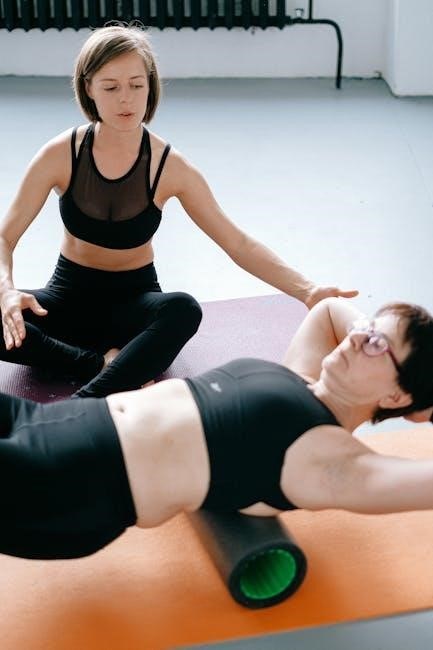
Utilizing a foam roller for VMO activation is a technique often highlighted in VMO strengthening PDFs, serving as an excellent preparatory step before more demanding exercises. This method focuses on releasing tension in the surrounding muscles, improving flexibility, and enhancing VMO recruitment.
To perform this, position yourself with the foam roller under your thigh, just above the knee. Slowly roll the foam roller back and forth, applying gentle pressure. Focus on areas that feel tight or tender.
PDF guides emphasize controlled movements and avoiding direct rolling over the kneecap. The goal isn’t intense pain, but rather a comfortable release of muscle tension.
This technique improves blood flow and prepares the VMO for activation, making subsequent exercises more effective. Combining foam rolling with targeted VMO exercises, as detailed in downloadable PDFs, creates a holistic approach to knee rehabilitation and strengthening.
Short Arc Quads (SAQ)
Short Arc Quads (SAQ) are a cornerstone exercise frequently detailed in VMO strengthening PDFs, renowned for their targeted activation of the vastus medialis oblique – the VMO. This exercise isolates the VMO, promoting strength and control in the lower portion of the knee extension.
To execute SAQ, sit with your knee bent at approximately 45 degrees, supported by a rolled towel or bolster under your knee. Slowly straighten your lower leg, focusing on contracting your quadriceps and specifically feeling the VMO engage.
VMO strengthening PDFs often emphasize maintaining a slow, controlled tempo and avoiding full knee extension to maximize VMO activation;
Holding the contraction for a few seconds before slowly lowering the leg back down further enhances muscle endurance. Incorporating SAQ into a routine, as outlined in these resources, is crucial for rehabilitating knee issues and improving overall lower body stability.
VMO-Focused Exercises – Intermediate Level
Intermediate VMO exercises, detailed in many PDFs, build upon foundational strength with increased complexity and demand, challenging knee stability further.
These routines progressively load the VMO, preparing it for more functional movements and advanced rehabilitation protocols.
Step-Ups (Focus on VMO Control)
Step-ups are a fantastic intermediate exercise for VMO strengthening, often detailed within comprehensive VMO exercise PDFs. The key isn’t just lifting your body onto the step, but controlling the descent – this eccentric control is where the VMO truly engages.
To perform correctly, choose a step height that challenges you without compromising form. As you step up, focus on initiating the movement with your quadriceps, specifically feeling the VMO activate to stabilize your knee. Avoid letting your knee cave inwards; maintain alignment over your foot.
Many PDFs emphasize the importance of a slow, controlled lowering phase. Resist gravity, engaging the VMO to gently lower yourself back down. This controlled eccentric contraction is crucial for building strength and endurance. Start with 3 sets of 10-12 repetitions per leg, gradually increasing the step height or adding weight (dumbbells) as you progress. Proper form, as illustrated in many downloadable guides, is paramount to prevent injury and maximize VMO activation.
Lunges with VMO Emphasis
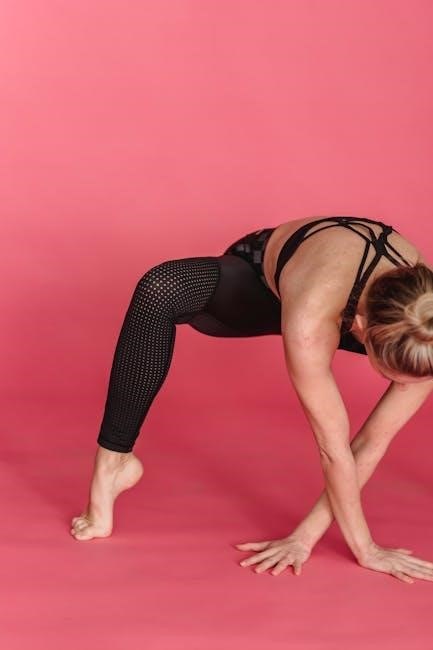
Lunges, a cornerstone of many VMO strengthening programs detailed in downloadable PDFs, require mindful execution to maximize VMO engagement. Unlike standard lunges, these emphasize knee tracking and controlled movement.
Begin by stepping forward into a lunge position, ensuring your front knee tracks directly over your ankle – avoid letting it drift inwards. This inward drift is a common mistake, and PDFs often highlight this with visual cues. Focus on maintaining a slight bend in your back knee and keeping your core engaged for stability.
The VMO’s role is critical in controlling this knee alignment. As you lower, consciously contract your VMO to prevent knee valgus (inward collapse). Push through your front heel to return to the starting position, continuing to focus on VMO activation. Aim for 3 sets of 10-12 repetitions per leg. Many PDFs suggest adding a resistance band around the knees for increased challenge and feedback on proper form.
Wall Sits with VMO Contraction
Wall sits, frequently illustrated in VMO strengthening exercise PDFs, are an excellent isometric exercise for building endurance in the quadriceps, particularly the VMO. Begin by standing with your back flat against a wall, feet shoulder-width apart and slightly away from the wall.
Slowly slide down the wall until your thighs are parallel to the floor, mimicking a seated position. The key to VMO activation lies in consciously squeezing your inner quadriceps muscle – the VMO – throughout the entire duration of the hold. Many PDFs emphasize maintaining proper form: a straight back, engaged core, and knees tracking over your ankles.
Hold this position for 30-60 seconds, focusing on that VMO contraction. Repeat for 3 sets. Advanced variations, often detailed in more comprehensive PDFs, include adding a resistance band around the knees to further challenge the VMO and enhance activation.
VMO-Focused Exercises – Advanced Level
Advanced VMO exercises, detailed in specialized PDFs, demand significant strength and control, pushing your knee stability to its limits for optimal results.
Single Leg Squats
Single leg squats are a cornerstone of advanced VMO strengthening, demanding exceptional balance, control, and quadriceps engagement, often detailed within comprehensive VMO exercise PDFs.
To perform correctly, begin by standing on one leg, extending the other leg forward for balance. Slowly lower your body as if sitting back into a chair, maintaining a straight back and engaged core.
Focus on keeping your knee tracking in line with your toes, preventing it from collapsing inward – a critical point emphasized in many PDF guides. The VMO plays a vital role in this alignment.
Depth is important, but prioritize maintaining proper form over achieving a full squat. PDF resources often suggest starting with shallow squats and gradually increasing depth as strength improves.
Consider using a support initially, such as a chair or wall, for balance. As you gain confidence, progress to performing the exercise unsupported. Many PDFs include progressions for this exercise.
Proper execution maximizes VMO activation, contributing to improved knee stability and function, making it a valuable addition to any advanced VMO strengthening program.
Bulgarian Split Squats
Bulgarian split squats are a highly effective, yet challenging, exercise for isolating and strengthening the VMO, frequently detailed within VMO strengthening exercise PDFs.
To execute this exercise, position your back to a bench or stable elevated surface. Place the top of one foot on the bench behind you. Step forward with the other leg into a lunge position.
Slowly lower your body until your front thigh is parallel to the ground, maintaining a straight back and engaged core. Focus on keeping your front knee tracking over your toes.
The rear leg elevation increases the demand on the front leg’s VMO, promoting targeted strengthening. PDF guides often emphasize controlled movements and proper form.
Avoid letting your front knee cave inward – a common mistake. Actively engage your VMO to maintain proper alignment throughout the movement.
This exercise is excellent for improving unilateral leg strength, balance, and VMO activation, contributing to enhanced knee stability and athletic performance.
Plyometric Exercises (Jump Squats with VMO Focus)
Plyometric exercises, like jump squats, elevate VMO strengthening to an advanced level, often covered in comprehensive VMO exercise PDFs.
Begin in a standard squat position, ensuring your core is engaged and your back is straight. Quickly explode upwards into a jump, extending your hips, knees, and ankles.
Focus on a soft landing, immediately returning to the squat position upon impact. The key is to minimize ground contact time, maximizing power and responsiveness.
To emphasize VMO activation, consciously control the descent, preventing your knees from caving inward. Maintain proper alignment throughout the entire movement.
PDF resources often highlight the importance of a stable landing, emphasizing the VMO’s role in controlling knee valgus (inward collapse).
Jump squats enhance explosive power, agility, and VMO strength, contributing to improved athletic performance and injury prevention. Start with low repetitions and gradually increase.
Integrating VMO Exercises into a Routine
VMO strengthening PDFs advocate for consistent integration, blending exercises into existing workouts for optimal results and sustained knee stability.
Strategic scheduling and progressive overload are key components, ensuring continuous challenge and adaptation for long-term benefits.
Frequency and Sets/Reps
VMO strengthening PDFs generally recommend incorporating these exercises 2-3 times per week, allowing for adequate muscle recovery between sessions. Beginners should start with 2 sessions, gradually increasing frequency as strength improves.
For sets and repetitions, a common guideline is 3 sets of 10-15 repetitions for each exercise. However, this can be adjusted based on individual fitness levels and the specific exercise being performed.
Beginners may start with lower repetitions (8-10) and focus on maintaining proper form. As strength increases, they can progress to higher repetitions (15-20) or add resistance.
Intermediate and advanced individuals can explore variations like drop sets or supersets to further challenge the VMO muscle. PDFs often provide detailed progressions, outlining how to increase intensity over time.
Listening to your body is crucial; if you experience pain, reduce the number of sets or repetitions, or modify the exercise. Consistency and proper form are more important than pushing yourself too hard, too soon.
Progression Strategies
VMO strengthening PDFs emphasize a gradual progression to avoid injury and maximize results. Initially, focus on mastering bodyweight exercises with perfect form before adding external resistance.
Resistance bands are an excellent starting point, progressing from lighter to heavier bands as strength increases. PDFs often illustrate proper band placement and technique for optimal VMO activation.
Once resistance bands become too easy, introduce dumbbells or ankle weights. Start with light weights and gradually increase the load over time.
Another progression strategy involves increasing the range of motion. For example, in a terminal knee extension, gradually increase the angle of knee flexion.
More advanced PDFs suggest incorporating plyometric exercises like jump squats with a focus on VMO control. This builds explosive power and enhances functional strength. Remember to prioritize form and listen to your body throughout the progression.
Common Mistakes to Avoid
VMO strengthening PDFs consistently warn against several common errors. One frequent mistake is insufficient warm-up, leading to muscle strains. Always prepare the muscles with dynamic stretches before starting exercises.
Another pitfall is using improper form, particularly during terminal knee extensions or squats. PDFs emphasize maintaining a neutral spine and controlled movements.
Overloading the muscles too quickly is a significant error. Progression should be gradual, increasing resistance or intensity incrementally.
Neglecting the hamstrings and glutes can create muscle imbalances, hindering VMO effectiveness. A balanced routine is crucial for optimal knee health.
Ignoring pain signals is detrimental. Stop immediately if you experience any sharp or persistent discomfort. PDFs often advise consulting a healthcare professional if pain persists.
Resources & PDF Downloads
Numerous online platforms offer comprehensive VMO strengthening exercise PDFs, providing detailed guides and visual aids for effective training programs.
These downloadable resources simplify access to expert-designed routines, promoting safe and optimal results for all fitness levels.
Finding Reputable VMO Exercise PDFs
Locating trustworthy VMO strengthening exercise PDFs requires careful consideration, as the quality and accuracy of information can vary significantly. Begin your search with websites affiliated with accredited physical therapy organizations or reputable fitness institutions; these sources generally adhere to evidence-based practices.
Look for PDFs created by qualified professionals, such as licensed physical therapists or certified athletic trainers, ensuring the exercises are safe and effective. Pay attention to the PDF’s publication date; newer resources are more likely to reflect current best practices.
Evaluate the content for clarity and detail, including proper form cues, progression guidelines, and potential modifications for different fitness levels. Beware of PDFs promoting overly aggressive or unsupported techniques. Cross-reference information with multiple sources to confirm accuracy and completeness.
Websites like those of hospitals, universities with physical therapy programs, and established fitness publications often host reliable VMO exercise PDFs. Always prioritize resources that emphasize proper technique and individualized program design.
Online Video Demonstrations
Complementing VMO strengthening exercise PDFs with online video demonstrations significantly enhances understanding and proper execution. Visual learning allows you to observe correct form, movement patterns, and subtle cues that are difficult to convey through text alone.
Seek out videos from qualified physical therapists or certified trainers who clearly explain the exercises and emphasize key anatomical points. Platforms like YouTube and Vimeo host a wealth of VMO-focused content, but prioritize channels with established credibility.
Look for demonstrations that offer multiple angles and slow-motion replays, enabling a comprehensive view of the technique. Pay attention to verbal cues regarding muscle engagement and body positioning.
Combine video instruction with your chosen PDF guide, using the visual aid to reinforce the written instructions and ensure accurate performance. Remember to start slowly and prioritize form over speed or resistance.
Always listen to your body and modify exercises as needed, consulting with a healthcare professional if you experience any pain.