Guided Surgery for Dental Implants: A Comprehensive Overview
Guided implant surgery utilizes surgical templates for accurate implant placement, offering precision, minimal invasiveness, and avoidance of anatomical damage.
Guided implant surgery represents a significant advancement in restorative dentistry, employing pre-surgical planning and the creation of surgical guides to ensure predictable and accurate implant placement. These guides, defined as tools assisting proper surgical angulation, transform implant procedures into a more streamlined and less invasive process.
Historically, implant placement relied heavily on clinical experience and two-dimensional imaging. Today, guided surgery leverages cone-beam computed tomography (CBCT) and digital impressions, allowing for a comprehensive three-dimensional understanding of the patient’s anatomy. This technology minimizes risks, reduces morbidity, and ultimately enhances treatment outcomes for both the clinician and patient.
The Evolution of Implant Dentistry
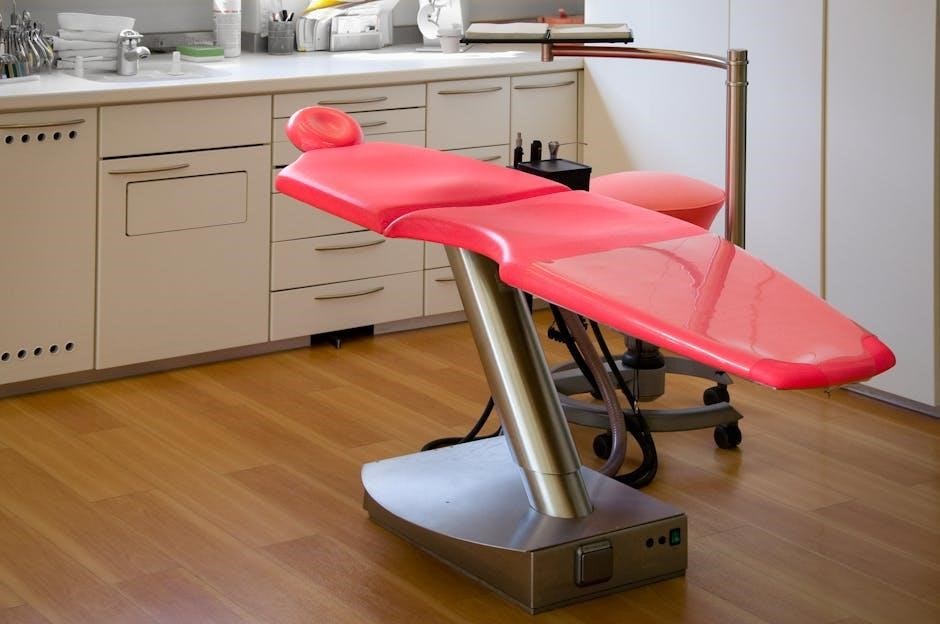
Implant dentistry has undergone a remarkable transformation, evolving from a largely exploratory surgical procedure to a highly predictable and technologically driven field. Early implant techniques, while pioneering, lacked the precision offered by modern methods. The introduction of CBCT scanning and digital treatment planning marked a pivotal shift, enabling clinicians to visualize anatomical structures with unprecedented detail.
This evolution culminated in the development of guided surgery, which utilizes surgical templates to direct implant placement. This approach minimizes invasive surgery, reduces patient morbidity, and allows for predictable outcomes, representing a significant leap forward in restorative care.
Benefits of Guided Surgery
Guided surgery offers substantial advantages over traditional implant placement techniques. Accuracy and precision are paramount, ensuring implants are positioned optimally for long-term success. This method facilitates minimally invasive procedures, leading to reduced patient discomfort and faster healing times. Critically, guided surgery significantly minimizes the risk of damaging vital anatomical structures, such as nerves and sinuses.
Furthermore, it streamlines the surgical workflow, potentially reducing overall treatment duration and improving predictability. The use of surgical guides enhances control and allows for precise angulation, crucial for optimal prosthetic outcomes.
Accuracy and Precision in Implant Placement
Guided surgery dramatically enhances accuracy and precision in implant placement, a cornerstone of successful outcomes. Utilizing pre-operative planning with CBCT scans and digital impressions, a surgical template directs the implant drill to the pre-determined position and angle. This minimizes deviations from the planned treatment, ensuring optimal implant positioning for restorative procedures.
The result is predictable implant placement, reducing the need for adjustments and improving prosthetic fit. This level of precision is particularly vital in areas with limited bone volume or proximity to critical anatomical structures.
Minimally Invasive Procedures & Reduced Morbidity
Guided surgery facilitates minimally invasive procedures, leading to reduced patient morbidity. The surgical template allows for smaller flap designs, or even flapless surgery in select cases, minimizing trauma to soft tissues and bone. This translates to less post-operative pain, swelling, and bruising for the patient.
Reduced surgical trauma also promotes faster healing times and a quicker return to normal function. By precisely guiding the implant placement, the need for extensive bone manipulation is often diminished, further contributing to a less invasive experience.
Avoiding Damage to Anatomical Structures
Guided surgery significantly reduces the risk of damaging vital anatomical structures during implant placement. Pre-operative CBCT scans provide a detailed 3D representation of the patient’s anatomy, including nerves, sinuses, and adjacent teeth. This information is used to create a surgical guide that precisely directs the implant osteotomy.
By adhering to the pre-planned path, the surgeon minimizes the potential for inadvertent injury to these critical structures, enhancing patient safety and predictability. This is particularly crucial in areas with complex anatomy or limited bone volume.
The Digital Workflow: A Step-by-Step Guide
Guided implant surgery relies on a precise digital workflow. It begins with Cone-Beam Computed Tomography (CBCT) scanning to capture detailed 3D images of the jawbone. Next, a digital impression is taken to record the patient’s soft and hard tissues. These datasets are then merged within specialized treatment planning software.
The software allows clinicians to virtually plan the implant placement, considering bone density, anatomical landmarks, and prosthetic requirements. This digital plan forms the basis for creating a custom surgical guide.
Cone-Beam Computed Tomography (CBCT) Scanning
Cone-Beam Computed Tomography (CBCT) is a crucial initial step in the guided implant surgery workflow. This advanced imaging technique provides detailed three-dimensional visualizations of the patient’s jawbone, teeth, and surrounding anatomical structures. CBCT scans surpass traditional X-rays, offering superior accuracy for assessing bone volume and density.
The resulting data is essential for precise treatment planning, allowing clinicians to identify critical structures like nerves and sinuses, ensuring safe and effective implant placement. Accurate CBCT imaging minimizes potential surgical complications.
Digital Impression Taking
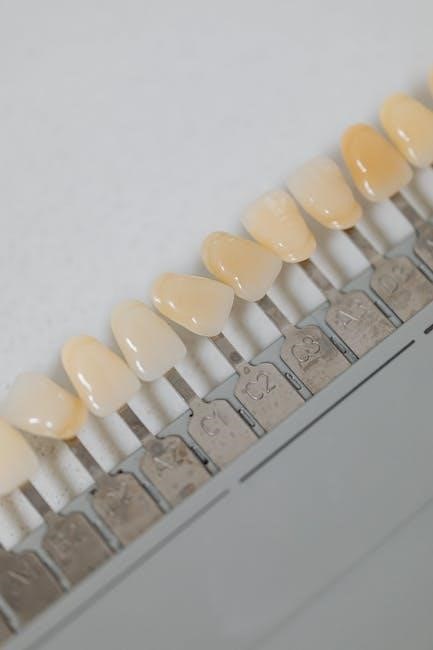
Digital impression taking represents a significant advancement over traditional analog impressions in guided implant surgery. Utilizing intraoral scanners, clinicians can capture highly accurate, detailed 3D models of the patient’s dentition and soft tissues directly within the mouth. This eliminates the discomfort and inaccuracies associated with impression materials.
These digital scans are seamlessly integrated into treatment planning software, providing a precise replica for virtual implant placement and surgical guide design. Digital impressions streamline the workflow and enhance overall treatment predictability.
Treatment Planning Software
Treatment planning software is central to guided implant surgery, enabling clinicians to visualize and plan implant placement in a 3D environment. Utilizing data from CBCT scans and digital impressions, these platforms allow for precise assessment of bone volume, nerve location, and anatomical landmarks.
Clinicians can virtually position implants, evaluate prosthetic outcomes, and design customized surgical guides. This software facilitates optimal implant positioning, minimizing risks and maximizing long-term success. Compatibility with various implant brands is a key feature.
Treatment Planning Software Options
Several treatment planning software options cater to guided implant surgery needs. Simplant Software stands out as a comprehensive, cost-effective system compatible with major implant brands, facilitating predictable treatment and even immediate smile delivery. Prismatik Software Integration offers a digital protocol seamlessly integrating into existing workflows.
Furthermore, these platforms boast compatibility with major planning platforms, ensuring flexibility. The ability to scan, plan, print, and place implants in-office, supported by robust implementation assistance, streamlines the process.
Simplant Software
Simplant Software is a robust, computer-guided implant treatment system designed for predictable outcomes. It’s notable for its cost-effectiveness and user-friendly interface, enabling clinicians to achieve precision in implant placement. This comprehensive 3D system supports a wide range of major implant brands currently available.
A key benefit is the potential for delivering an Immediate Smile on the day of surgery. Simplant allows for thorough review and adjustment of the treatment plan, ensuring optimal implant positioning before the surgical phase begins.
Prismatik Software Integration
Prismatik offers a digital protocol built on smarter standards, seamlessly integrating into existing practice workflows for enhanced efficiency. This system prioritizes compatibility, working effectively with labs utilizing guided workflow processes. Furthermore, Prismatik boasts integration with all major planning software platforms, providing flexibility and choice for dental professionals.
The recommended in-office workflow – scan, plan, print, and place – is supported by best-in-class implementation assistance. Prismatik is backed by a dedicated team of researchers, scientists, and technicians committed to advancing implant therapies.
Compatibility with Major Planning Platforms
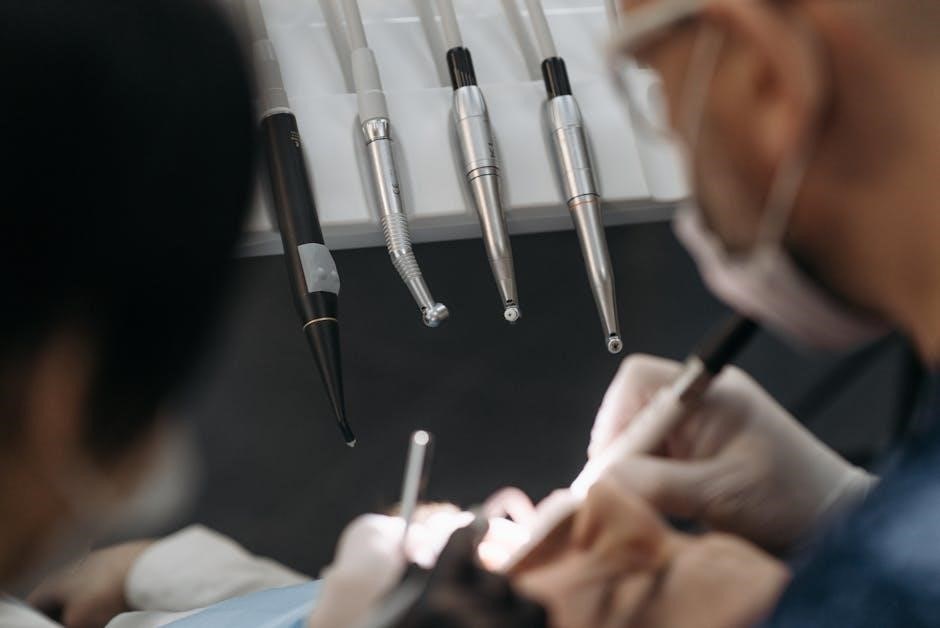
Simplant computer-guided implant treatment demonstrates broad compatibility, functioning seamlessly with most major implant brands currently utilized in modern dentistry. This ensures predictable and reliable implant outcomes for a diverse range of clinical situations. The system’s open architecture facilitates integration with various digital planning tools.
Prismatik also emphasizes full compatibility with existing laboratory guided workflows and all major planning software platforms, offering clinicians flexibility and choice. This interoperability streamlines the digital process, enhancing efficiency and precision.
Surgical Guide Design and Fabrication
Surgical guide creation begins with careful material selection, prioritizing biocompatibility, stability, and sterilization capabilities. The design process leverages CBCT scans and digital impressions to precisely map the patient’s anatomy. 3D printing technologies are central to fabrication, enabling the production of accurate and customized guides.
Guide customization is crucial, adapting to individual case complexities and ensuring optimal fit. This involves adjusting for soft tissue contours and bone morphology, resulting in a highly personalized surgical aid for predictable implant placement.
Material Selection for Surgical Guides
Choosing the right material for surgical guides is paramount, demanding biocompatibility to ensure no adverse tissue reactions. Stability is key, preventing deformation during the surgical procedure and maintaining accuracy. Sterilization compatibility is also essential, allowing for thorough disinfection prior to use.
Common materials include medical-grade polymers and resins, offering a balance of strength, flexibility, and printability. Prismatik emphasizes progressive materials, combining proven protocols with advanced technologies for optimal guide performance and predictable outcomes.
3D Printing Technologies in Guide Creation
3D printing revolutionized surgical guide fabrication, enabling precise and customized designs. Stereolithography (SLA) and Selective Laser Sintering (SLS) are frequently employed, each offering unique advantages in terms of resolution and material options.
SLA delivers high accuracy for intricate details, while SLS provides robust guides suitable for demanding surgical scenarios. Prismatik leverages cutting-edge 3D printing technologies, ensuring guides meet stringent quality standards and facilitate predictable implant placement. This streamlines workflows and enhances treatment outcomes.
Guide Customization for Specific Cases
Effective guided surgery demands tailored approaches, recognizing unique anatomical variations. Guides aren’t one-size-fits-all; customization addresses bone density, soft tissue contours, and implant brand compatibility. Prismatik emphasizes personalized guide design, accounting for individual patient needs and surgical objectives.
This includes modifications for immediate load scenarios or complex cases requiring angled implant placement. Precise adjustments ensure optimal fit and stability during surgery, maximizing accuracy and minimizing potential complications. Customization is key to predictable, successful implant outcomes.
Surgical Guide Types
Surgical guides vary based on support structure and surgical approach. Mucosa-supported guides rest on the gum tissue, suitable for cases with sufficient soft tissue coverage and bone height. Bone-supported guides, anchored directly to the underlying bone, offer enhanced stability in challenging situations.
Furthermore, surgery can be fully guided, directing all aspects of implant placement, or pilot guided, providing initial guidance for osteotomy creation. The choice depends on clinical factors, surgeon preference, and desired level of control during the procedure.
Mucosa-Supported Guides
Mucosa-supported surgical guides are designed to rest directly on the patient’s gingival tissues during implant placement. These guides are particularly effective in cases exhibiting adequate soft tissue height and healthy keratinized gingiva, providing stable support during the osteotomy preparation.
They are generally fabricated from resin materials and offer a simpler, more cost-effective solution compared to bone-supported options. However, their accuracy relies heavily on proper adaptation to the soft tissues and may be less predictable in areas with thin biotypes or inflammation.
Bone-Supported Guides
Bone-supported surgical guides, also known as fully guided surgery systems, extend onto the underlying bone, providing enhanced stability and precision during implant placement. These guides are ideal for cases with limited soft tissue height, compromised keratinized gingiva, or when a higher degree of accuracy is paramount.
Typically fabricated using robust materials and advanced 3D printing technologies, bone-supported guides offer superior control over implant angulation and depth. They minimize deviations and ensure predictable outcomes, especially in complex anatomical situations.
Fully Guided vs. Pilot Guided Surgery
Fully guided surgery employs a surgical guide that dictates the final implant position and diameter, offering complete control throughout the osteotomy preparation. Conversely, pilot guided surgery utilizes a guide with smaller diameter openings, serving only to direct the initial pilot drill.
Pilot guides allow for adjustments during the procedure, accommodating unforeseen circumstances or anatomical variations. Fully guided approaches prioritize precision and predictability, while pilot guides offer flexibility. The choice depends on clinical complexity, surgeon experience, and desired level of control.
Immediate Load Implants & Guided Surgery
Immediate load implants, where a restoration is placed on the implant immediately after surgery, benefit significantly from guided surgery’s precision. Accurate implant placement, facilitated by surgical guides, is crucial for achieving optimal primary stability and proper prosthetic loading.
Guided surgery minimizes surgical trauma, preserving bone quality essential for immediate loading success. The predictable outcomes offered by guided procedures reduce the risk of complications and enhance the long-term prognosis of immediate load cases, delivering an “Immediate Smile” on the day of surgery.
The Role of Implant Brands & Compatibility
Guided surgery demonstrates broad implant brand compatibility, offering flexibility for clinicians. Systems like Simplant are designed to work effectively with most major implant manufacturers currently available, ensuring predictable treatment outcomes regardless of brand preference.
This compatibility streamlines workflows, allowing dentists to utilize their preferred implant systems within a digital planning and guided surgical framework. Clinicians aren’t locked into specific brands to benefit from the precision and advantages of guided implant procedures, fostering greater control and customization.
In-Office Digital Workflow: Scan, Plan, Print, Place
Prismatik champions a streamlined in-office digital workflow: scan the patient’s mouth, meticulously plan the implant placement using advanced software, print a customized surgical guide, and finally, place the implant with enhanced accuracy. This integrated approach minimizes external lab dependencies and turnaround times.
Best-in-class implementation support ensures a smooth transition and maximizes efficiency. This workflow empowers dental practices to deliver immediate results, potentially offering an “Immediate Smile” on the day of surgery, enhancing patient satisfaction and treatment predictability.
Implementation Support & Training
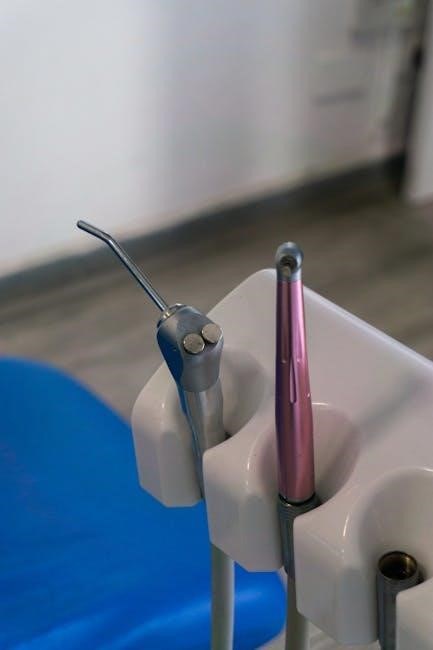
Prismatik provides comprehensive implementation support, designed to seamlessly integrate guided surgery into existing practice workflows. This includes dedicated training programs for dentists and staff, covering digital scanning, treatment planning software utilization, and surgical guide application.
The support extends beyond initial setup, offering ongoing technical assistance and clinical guidance. This commitment ensures practitioners confidently leverage the technology’s full potential, achieving predictable and successful implant outcomes. Robust support minimizes learning curves and maximizes return on investment.
The Support Team: Researchers, Scientists & Technicians
Prismatik boasts a dedicated team of highly respected professionals – researchers, material scientists, clinical specialists, and dental technicians – committed to advancing implant therapies. This collaborative group combines proven treatment protocols with progressive materials and cutting-edge technologies.
Their expertise ensures continuous innovation and refinement of guided surgery solutions. This team provides invaluable support, driving improvements in accuracy, efficiency, and long-term success rates. They are dedicated to empowering clinicians with the tools and knowledge needed for optimal patient care.
Potential Complications & Troubleshooting
While guided surgery significantly reduces risks, potential complications can occur. Guide fit issues may arise, requiring adjustments or remakes to ensure proper seating and stability during the surgical procedure. Screw loosening and compromised guide stability can also present challenges.
Addressing these requires careful assessment and potentially utilizing fixation pins or alternative guide designs. Thorough pre-operative planning and meticulous surgical technique are crucial for minimizing complications and ensuring predictable outcomes. Prompt troubleshooting is essential for successful implant placement.
Guide Fit Issues
Improper guide fit is a potential complication in guided implant surgery, stemming from inaccuracies in the digital workflow or fabrication process. Poor adaptation can lead to instability during drilling, compromising implant angulation and position. Addressing fit issues may involve minor adjustments using specialized burs, or, in severe cases, necessitates a new guide.
Careful evaluation of the guide on the model and intraorally before surgery is vital. Precise scanning, accurate impression taking, and quality control during 3D printing are crucial preventative measures. A snug, stable fit is paramount for predictable results.
Screw Loosening & Guide Stability
Maintaining guide stability during osteotomy preparation is critical; screw loosening can compromise accuracy. Utilizing appropriate screw length and diameter, alongside proper tightening torque, minimizes this risk. Regularly checking screw tightness intraoperatively is recommended, especially with prolonged surgical procedures.
Guide material selection also impacts stability – rigid materials offer better support. Addressing instability might involve additional fixation screws or temporarily halting the procedure to reassess. A stable guide ensures predictable implant placement, preventing deviations from the planned surgical path.
Long-Term Success Rates of Guided Implants
Guided implant surgery demonstrates promising long-term success, often exceeding traditional methods due to enhanced precision. Studies indicate high implant survival rates – frequently above 95% over 5-10 years – when utilizing guided techniques. Factors influencing success include accurate treatment planning, proper surgical execution, and patient compliance with post-operative care.
Reduced biological complications, like peri-implantitis, are observed with precise implant placement. Predictable outcomes contribute to improved aesthetics and function, enhancing patient satisfaction and overall treatment longevity.
Cost Considerations of Guided Surgery
Guided implant surgery generally involves a higher upfront investment compared to traditional methods, primarily due to the digital workflow and surgical guide fabrication. Costs encompass CBCT scans, digital impressions, treatment planning software, guide design and manufacturing, and potentially, specialized training.
However, this initial expense can be offset by reduced surgical time, fewer complications, and potentially, avoiding costly corrective procedures. Long-term value stems from predictable outcomes and minimized risks, ultimately contributing to a more successful and durable restoration.
Patient Selection Criteria
Ideal candidates for guided implant surgery possess sufficient bone volume and density to support implants, though bone grafting can address deficiencies. Comprehensive evaluation includes a thorough medical and dental history, assessing systemic conditions like diabetes or osteoporosis.
Patients with high aesthetic demands or complex anatomical situations particularly benefit from the precision offered by guided surgery. Good oral hygiene and commitment to post-operative care are crucial for long-term success. Careful consideration ensures optimal treatment planning and predictable outcomes.
Comparing Guided Surgery to Traditional Methods
Traditional implant surgery relies heavily on the surgeon’s experience and visual assessment, potentially leading to variations in implant placement. Guided surgery, conversely, leverages pre-operative planning with CBCT scans and digital impressions, enhancing accuracy and minimizing deviations.
Invasiveness is reduced with guided techniques, often requiring smaller incisions and resulting in less post-operative discomfort. Predictability is significantly improved, especially in complex cases, offering a more reliable outcome compared to conventional approaches.
Advances in Guided Surgery Technology
Recent advancements focus on refining digital workflows and materials used in surgical guide fabrication. Improved CBCT scanning provides higher resolution images, enhancing treatment planning accuracy. Newer treatment planning software offers dynamic simulations and virtual implant placement, optimizing outcomes.
Material science has yielded stronger, more biocompatible guide materials. Integration with intraoral scanners streamlines the digital impression process. Prismatik’s approach exemplifies seamless integration and progressive techniques, pushing the boundaries of precision in implant dentistry.
The Future of Guided Implant Dentistry
The future envisions fully integrated, chairside digital workflows – scan, plan, print, and place – becoming standard practice. Artificial intelligence (AI) will likely play a larger role in treatment planning, automating processes and predicting outcomes with greater accuracy. Enhanced materials will offer improved guide durability and biocompatibility.
Real-time navigation during surgery, utilizing augmented reality, could further refine implant placement. Prismatik’s dedication to research suggests continued innovation in materials and techniques, driving the field forward. Expect increased accessibility and affordability of guided surgery for broader patient benefit.
Case Studies: Demonstrating Successful Outcomes
Numerous case studies highlight the benefits of guided surgery, showcasing predictable implant treatment with major implant brands like those compatible with Simplant software. Immediate Smile protocols, facilitated by precise planning, demonstrate successful same-day loading in suitable candidates.
Complex cases involving anatomical limitations or aesthetic concerns consistently show improved outcomes with guided approaches. Prismatik’s focus on proven protocols and advanced materials contributes to these successes. These examples demonstrate reduced morbidity, enhanced accuracy, and improved long-term implant stability for patients.
Maintaining Surgical Guide Accuracy
Ensuring surgical guide fit is paramount; any discrepancies can compromise implant placement. Addressing guide fit issues proactively, through careful CBCT scanning and digital planning, minimizes errors. Screw loosening and guide instability during surgery require immediate attention, potentially necessitating guide re-seating or temporary stabilization.
Proper material selection and 3D printing technologies contribute to dimensional accuracy. Regular quality control checks of printed guides are essential. Maintaining a sterile environment and careful handling throughout the procedure further safeguards precision.
Integration with Laboratory Workflows
Seamless integration with dental laboratories is crucial for successful guided surgery. Digital impressions and CBCT scans are transmitted electronically, facilitating efficient treatment planning and surgical guide design. Clear communication between dentist, surgeon, and lab is vital to confirm anatomical landmarks and desired implant positions.
Laboratories utilize treatment planning software to create precise surgical guides, employing 3D printing technologies. A standardized digital workflow ensures consistency and reduces errors, ultimately enhancing predictability and patient outcomes.
Communication Between Dentist, Surgeon & Lab
Effective communication is paramount for optimal guided implant outcomes. A collaborative approach between the dentist, surgeon, and dental laboratory ensures accurate treatment planning and surgical guide fabrication. Detailed discussions regarding anatomical considerations, desired implant positions, and prosthetic goals are essential.
Digital files – including CBCT scans and impressions – must be transmitted securely and reviewed thoroughly. Clear protocols for addressing any discrepancies or concerns streamline the process, minimizing errors and maximizing predictability.
Guided surgery represents a significant advancement in implant dentistry, prioritizing precision and predictability. By leveraging digital workflows and customized surgical guides, clinicians can achieve optimal implant placement, minimizing risks and maximizing long-term success rates. This technology facilitates minimally invasive procedures, reducing patient morbidity and enhancing the overall treatment experience.
Investing in guided surgery demonstrates a commitment to delivering exceptional patient care and achieving consistently favorable outcomes. The integration of advanced technologies elevates the standard of implant dentistry.