Manual Pour Over: A Comprehensive Guide
Pour‚ expressing purpose‚ intention‚ or objective‚ unveils a brewing method prioritizing control and flavor; a journey into precision‚
resulting in a uniquely satisfying coffee experience‚ demanding mindful technique.
What is Manual Pour Over?
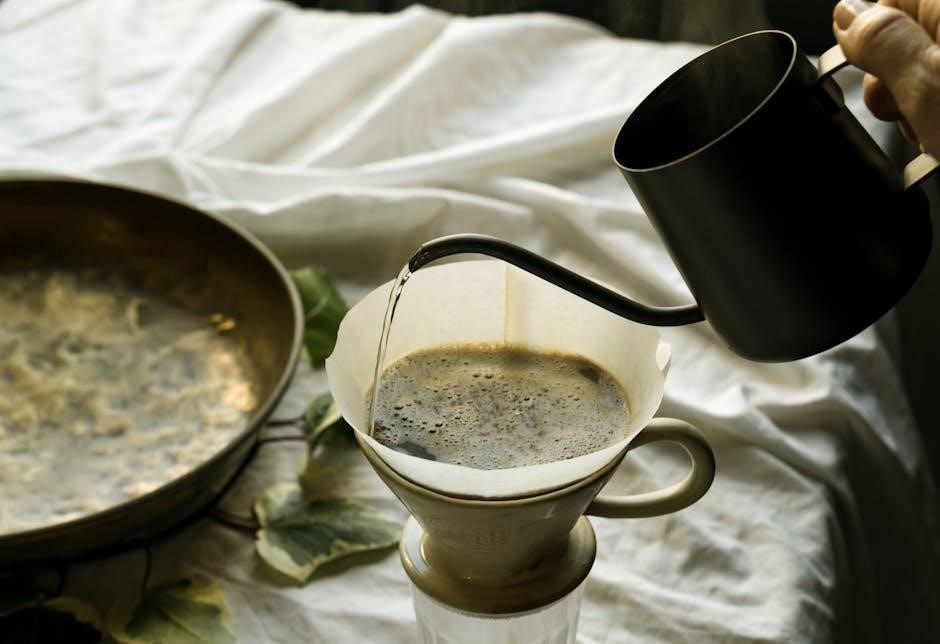
Manual pour over is a coffee brewing method that emphasizes control and precision‚ allowing the barista to meticulously influence every aspect of the extraction process. Unlike automated drip machines‚ pour over requires a hands-on approach‚ where hot water is slowly and deliberately poured over coffee grounds held within a filter. This method prioritizes a clean‚ nuanced cup‚ highlighting the unique characteristics of the coffee bean.
The term “pour over” itself describes the action – pouring water over the grounds. However‚ it represents far more than a simple pouring technique. It’s about understanding water temperature‚ grind size‚ pour rate‚ and saturation to achieve optimal extraction. It’s a deliberate‚ almost meditative process‚ offering a connection between the brewer and the beverage‚ resulting in a truly personalized coffee experience.
History and Origins of Pour Over Coffee
The roots of manual pour over trace back to the early 20th century‚ with the invention of the first paper coffee filter by Melitta Bentz in 1908. Dissatisfied with the gritty‚ bitter taste of coffee brewed at the time‚ Bentz‚ a German housewife‚ ingeniously used blotting paper from her son’s schoolbook to filter coffee. This simple innovation revolutionized coffee brewing‚ paving the way for cleaner‚ brighter cups.
While Bentz’s filter was the precursor‚ the modern pour over methods we know today – like the Hario V60 and Chemex – emerged later. Japanese and American designers refined the process‚ focusing on cone-shaped brewers and specialized filters to enhance flavor clarity. The method gained traction amongst coffee enthusiasts seeking greater control and a more refined brewing experience‚ evolving into the specialty coffee staple it is today.
Why Choose Manual Pour Over?
Manual pour over offers an unparalleled level of control over the brewing process‚ allowing you to fine-tune variables like water temperature‚ pour rate‚ and saturation for a truly customized cup. This control translates to exceptional flavor clarity‚ highlighting the nuanced characteristics of your chosen coffee beans – a level of detail often lost in automated methods.
Beyond flavor‚ pour over is a mindful and meditative experience. The deliberate‚ slow process encourages a connection with your coffee‚ transforming brewing from a chore into a ritual. It’s also a relatively affordable entry point into specialty coffee‚ requiring minimal equipment beyond a brewer‚ filters‚ and a gooseneck kettle. Ultimately‚ choosing pour over is choosing quality‚ control‚ and a deeper appreciation for the art of coffee.
Essential Equipment for Pour Over
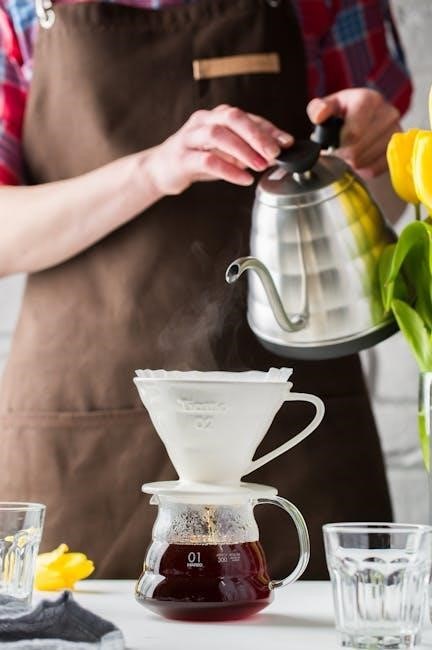
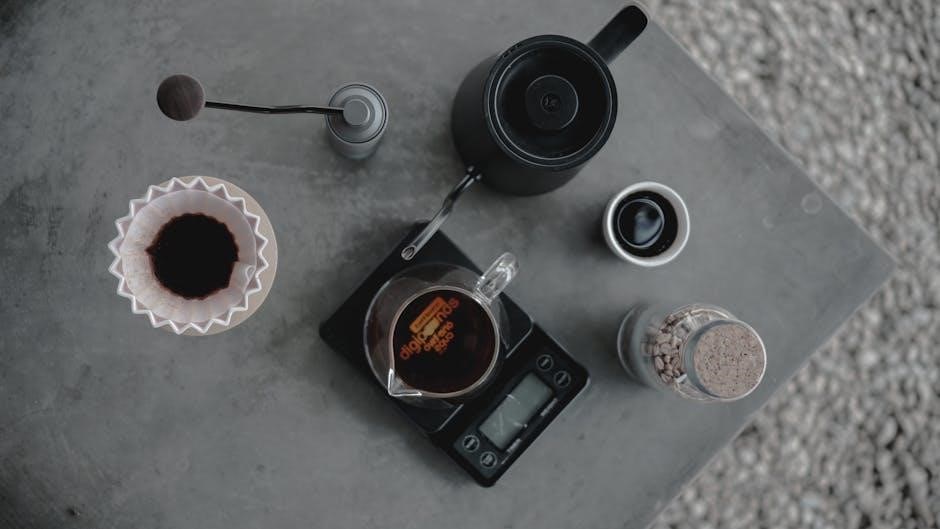
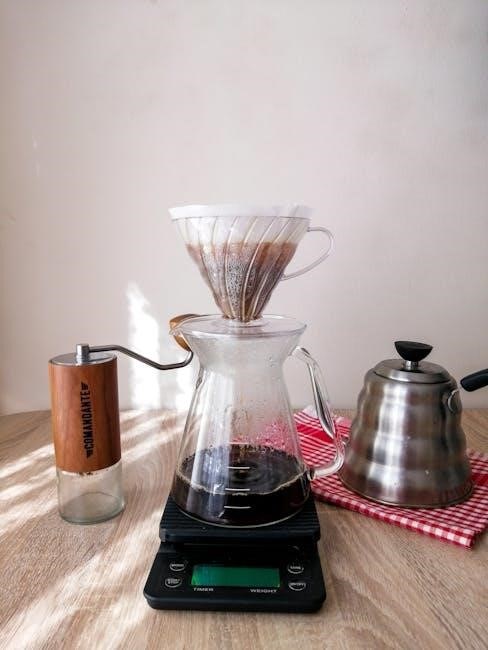
Essential tools include a pour over device‚ filters (paper‚ metal‚ or cloth)‚ a gooseneck kettle for precision‚ and a quality burr grinder for consistent results.
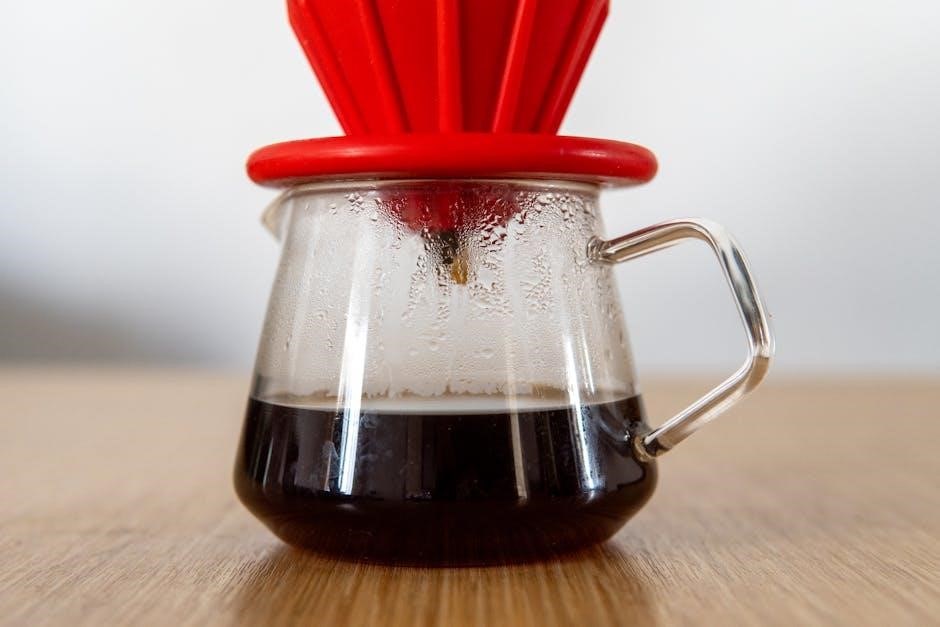
Pour Over Devices: Hario V60‚ Chemex‚ Kalita Wave
Choosing the right pour over device significantly impacts the final cup. The Hario V60‚ with its 60-degree angle‚ promotes excellent flow control and clarity‚ favored by those seeking nuanced flavors. Its paper filters contribute to a clean taste.
The Chemex‚ an iconic hourglass-shaped brewer‚ utilizes thicker bonded filters‚ resulting in an exceptionally clean‚ sediment-free brew‚ often highlighting brighter acidity. It’s known for its elegant design and larger batch capabilities.
The Kalita Wave features a flat-bottomed design and wave filters‚ offering more consistent extraction and forgiving brewing parameters‚ making it ideal for beginners. It provides a balanced and flavorful cup with less technique sensitivity.
Each device offers a unique brewing experience‚ catering to different preferences and skill levels‚ ultimately influencing the coffee’s body‚ clarity‚ and overall flavor profile.
Filters: Paper‚ Metal‚ Cloth – Pros and Cons
Filter choice dramatically alters the pour over experience. Paper filters‚ the most common‚ offer clarity and remove oils‚ resulting in a clean‚ bright cup. However‚ they can absorb some flavor compounds and require pre-rinsing to eliminate papery taste.
Metal filters allow more oils and sediment to pass through‚ creating a fuller-bodied‚ richer brew. They are reusable and environmentally friendly‚ but can sometimes result in a muddier cup and require thorough cleaning.
Cloth filters provide a balance between paper and metal‚ offering good clarity while retaining some oils for a more complex flavor. They are reusable but demand meticulous cleaning and can harbor flavors if not properly maintained.
Ultimately‚ the best filter depends on your desired flavor profile and willingness to maintain the filter type.
Gooseneck Kettles: Importance of Controlled Pouring
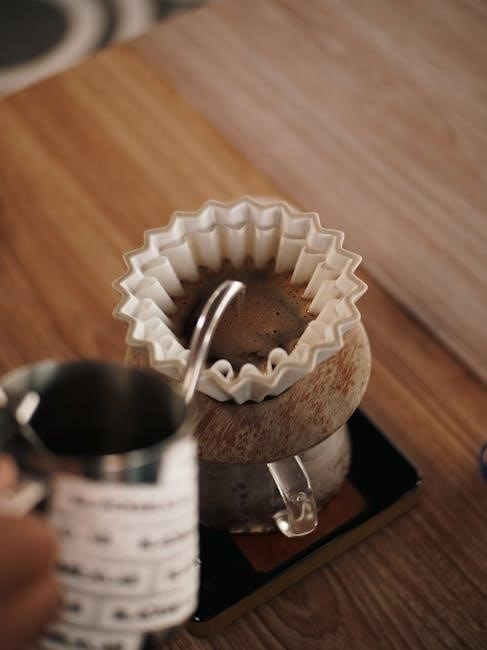
A gooseneck kettle is paramount for manual pour over‚ enabling precise water flow control. Unlike standard kettles‚ the elongated‚ narrow spout allows for a slow‚ steady stream‚ crucial for even saturation of the coffee grounds. This controlled pour minimizes channeling – where water finds the path of least resistance – leading to uneven extraction.
Consistent pouring is key to unlocking the coffee’s full potential. The gooseneck’s design facilitates techniques like spiral pours and pulse pouring‚ enhancing flavor complexity. Without this control‚ achieving a balanced and nuanced cup becomes significantly more challenging.
Investing in a quality gooseneck kettle is a fundamental step towards mastering the art of manual pour over‚ elevating your brewing experience.
Coffee Grinders: Burr vs. Blade – Achieving Consistency
For manual pour over‚ coffee grinder selection is critical; consistency is non-negotiable. Burr grinders‚ utilizing two revolving abrasive surfaces‚ produce a uniform grind size‚ essential for even extraction. This consistency allows for predictable brewing and optimal flavor development.
Blade grinders‚ conversely‚ chop beans with a spinning blade‚ resulting in an inconsistent grind with varying particle sizes. This unevenness leads to over-extraction of smaller particles and under-extraction of larger ones‚ creating a muddy‚ unbalanced cup.
While blade grinders are cheaper‚ a burr grinder is a worthwhile investment for serious pour over enthusiasts. Achieving a consistent grind unlocks the full potential of your coffee beans‚ delivering a superior brewing experience.
The Pour Over Process: Step-by-Step
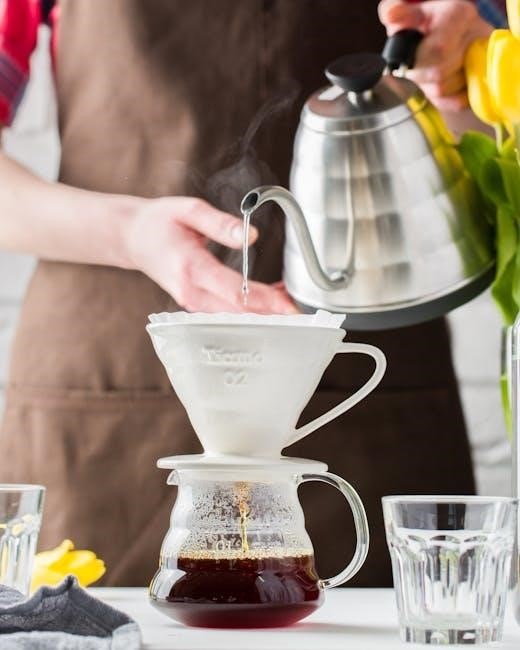
A mindful ritual‚ pour over demands precision: heat water‚ grind beans‚ rinse filters‚ bloom coffee‚ pour slowly‚ and enjoy the resulting aromatic‚ flavorful brew.
Step 1: Heating the Water – Optimal Temperature
Achieving the correct water temperature is paramount for successful pour over coffee. Generally‚ the ideal range falls between 195-205°F (90-96°C). Water that is too cold will result in underextraction‚ leading to a sour and underdeveloped flavor profile. Conversely‚ water that is too hot can cause overextraction‚ producing a bitter and harsh taste.
Using a gooseneck kettle with temperature control is highly recommended‚ allowing for precise adjustments. If a temperature-controlled kettle isn’t available‚ bring water to a boil and then let it sit for approximately 30-60 seconds to allow it to cool slightly. Consistent temperature control is key to repeatable results and unlocking the full potential of your coffee beans. Remember‚ slight adjustments may be needed based on bean origin and roast level.
Step 2: Grinding the Coffee – Grind Size Matters
The grind size is critically important for pour over coffee‚ directly impacting extraction. A medium-coarse grind‚ resembling coarse sand‚ is generally recommended. If the grind is too fine‚ it will lead to overextraction and a bitter taste‚ as water passes through too slowly. Conversely‚ a grind that is too coarse will result in underextraction‚ producing a weak and sour cup.
Investing in a burr grinder is essential for achieving consistent grind size. Burr grinders crush the beans between two revolving abrasive surfaces‚ providing a uniform particle size. Blade grinders‚ which chop the beans‚ create an inconsistent grind‚ hindering optimal extraction. Freshly grinding your beans immediately before brewing is always best to preserve aroma and flavor;
Step 3: Rinsing the Filter – Removing Paper Taste
Rinsing the paper filter before brewing is a crucial‚ often overlooked step. Paper filters can impart a papery taste to your coffee if not properly prepared. To rinse‚ simply place the filter in your pour over device and saturate it thoroughly with hot water – the same temperature you’ll use for brewing.
Allow the water to drip through completely‚ discarding the rinse water. This process serves two key purposes: it eliminates any lingering paper flavor and preheats both the pour over device and your serving vessel‚ maintaining a stable brewing temperature. A warmed brewer ensures consistent extraction‚ contributing to a cleaner‚ more flavorful cup of coffee;
Step 4: Blooming the Coffee – Degassing and Flavor Release
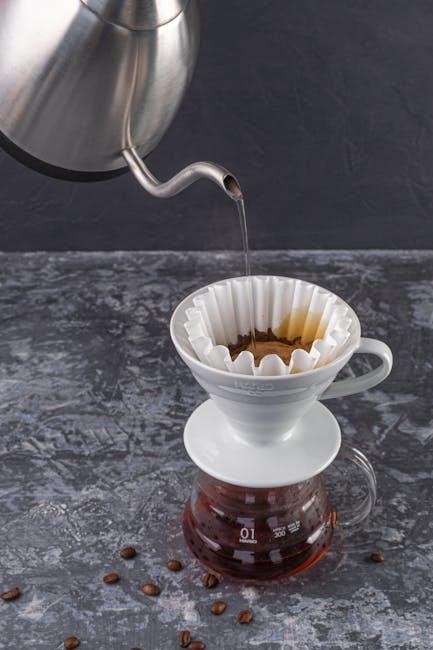
Blooming is the initial saturation of the ground coffee‚ allowing it to ‘bloom’ – a vital step for optimal flavor. Pour roughly twice the amount of water as coffee grounds (e.g.‚ 60g water for 30g coffee) over the grounds‚ ensuring even saturation. This releases trapped carbon dioxide‚ a byproduct of the roasting process.
You’ll observe bubbling as the CO2 escapes; this degassing allows for better extraction during the main pour. Allow the coffee to bloom for 30-45 seconds. This process unlocks complex aromas and flavors‚ preventing a flat or muted taste. Blooming is akin to waking up the coffee‚ preparing it to fully express its potential in your cup.
Step 5: The Pour – Techniques for Even Saturation
Following the bloom‚ initiate the main pour with a slow‚ steady‚ and circular motion. Begin in the center and spiral outwards‚ ensuring all grounds are evenly saturated. Maintain a consistent water level throughout the brewing process‚ avoiding pouring directly onto the filter paper.
Control is key; a gooseneck kettle facilitates precision. Aim for a gentle‚ laminar flow‚ rather than a forceful stream. Different techniques‚ like pulse pouring (short bursts)‚ can enhance flavor complexity. The goal is uniform extraction‚ preventing channeling (where water bypasses grounds). A consistent pour yields a balanced‚ flavorful cup‚ maximizing the coffee’s potential.
Step 6: Drawdown and Enjoying Your Coffee
As the water filters through‚ observe the ‘drawdown’ – the time it takes for the water to completely pass through the grounds. A typical drawdown should take between 2-4 minutes‚ though this varies with grind size and coffee. Once complete‚ gently remove the pour-over device and discard the filter.
Now‚ the reward! Swirl the brewed coffee to release aromas and enjoy immediately. Note the flavors‚ body‚ and overall balance. Manual pour-over allows for nuanced adjustments; experiment with variables to refine your brew. Savor the experience – it’s a mindful ritual yielding a superior cup‚ a testament to precision and patience.
Factors Affecting Pour Over Quality
Water quality‚ bean origin‚ roast level‚ and pouring technique intertwine‚ profoundly influencing the final cup; consistency and control are paramount for optimal extraction and flavor.
Water Quality: Minerals and pH Levels
The composition of your water dramatically impacts pour over coffee. Ideally‚ water should contain a moderate mineral content‚ specifically calcium and magnesium‚ which act as extraction agents‚ enhancing flavor complexity. Distilled or overly softened water lacks these crucial minerals‚ resulting in a flat‚ lifeless brew.
A Total Dissolved Solids (TDS) level between 75-250 ppm is generally recommended. pH levels also play a role; a slightly acidic pH (around 6.5-7.5) is optimal for coffee extraction. Water that is too alkaline can lead to a muted‚ less vibrant cup. Consider using filtered water‚ or bottled spring water with a known mineral profile‚ to ensure consistent results. Experimenting with different water sources can unlock subtle nuances in your coffee’s flavor profile‚ revealing hidden depths and complexities.
Coffee Bean Origin and Roast Level
The origin of your coffee beans profoundly influences the final cup’s characteristics. Ethiopian Yirgacheffe‚ known for its floral and citrus notes‚ will behave differently than a Sumatran Mandheling‚ boasting earthy and chocolatey flavors. Understanding these inherent qualities is crucial for optimizing your pour over technique.
Roast level also significantly impacts extraction. Lighter roasts retain more acidity and complex flavors‚ requiring a finer grind and potentially hotter water. Darker roasts‚ with their bolder‚ more developed flavors‚ often benefit from a coarser grind and slightly cooler water to avoid bitterness. Experimenting with beans from various origins and roast levels allows you to discover your preferred flavor profiles and refine your brewing process‚ unlocking the full potential of each bean.
Coffee-to-Water Ratio: Finding Your Sweet Spot
Achieving the ideal coffee-to-water ratio is paramount for a balanced pour over. A common starting point is a 1:16 ratio – one gram of coffee to sixteen grams of water. However‚ this is merely a guideline; personal preference and bean characteristics dictate the optimal ratio.
For a stronger brew‚ decrease the water amount (e.g.‚ 1:15 or 1:14). A weaker brew requires more water (e.g.‚ 1:17 or 1:18). Precise measurement using a digital scale is essential for consistency. Experimenting within this range allows you to fine-tune the strength and flavor intensity. Remember to adjust your grind size accordingly; a finer grind extracts more quickly‚ potentially requiring a slightly higher ratio.
Pouring Technique: Consistency and Control
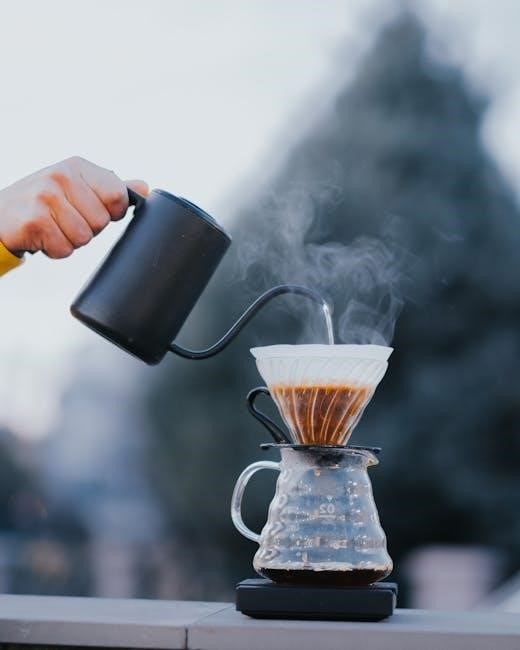
Mastering the pour is central to exceptional pour over coffee. A slow‚ steady‚ and circular pouring motion ensures even saturation of the coffee grounds‚ promoting uniform extraction. Begin with a gentle pre-infusion‚ saturating the grounds and allowing them to bloom – releasing trapped carbon dioxide.
Maintain a consistent pour rate throughout the brewing process‚ avoiding sudden surges or interruptions. The goal is to create a vortex‚ gently agitating the grounds without disturbing the filter. Practice controlling the flow from your gooseneck kettle; consistency is key. Observe the drawdown – the rate at which water filters through – and adjust your technique accordingly for optimal flavor development.
Troubleshooting Common Pour Over Issues
Addressing bitterness‚ sourness‚ slow drawdown‚ or uneven extraction requires careful diagnosis; adjusting grind size‚ water temperature‚ or pouring technique unlocks balanced‚ flavorful results.
Bitter Coffee: Causes and Solutions
Bitter coffee from a pour over often signals over-extraction‚ meaning too many solubles were drawn from the grounds. Several factors contribute to this. Firstly‚ the water temperature might be too high‚ scorching the coffee. Aim for 195-205°F (90-96°C). Secondly‚ the grind size could be too fine‚ increasing surface area and accelerating extraction. Coarsen your grind slightly.
Additionally‚ an excessively long brew time leads to bitterness. Shorten the overall brewing process by adjusting your pour rate. Finally‚ the coffee-to-water ratio might be off; using too much coffee for the amount of water will intensify flavors‚ including undesirable bitterness. To remedy this‚ experiment with a slightly lower coffee dose. Remember to adjust only one variable at a time to pinpoint the exact cause and achieve a smoother‚ more balanced cup.
Sour Coffee: Causes and Solutions
Sourness in pour over coffee typically indicates under-extraction – not enough desirable compounds were dissolved from the grounds. This often stems from insufficient contact time between water and coffee. Firstly‚ ensure your water temperature isn’t too low; aim for 195-205°F (90-96°C) to facilitate proper extraction. Secondly‚ the grind size might be too coarse‚ reducing surface area and hindering dissolution. Try a finer grind setting.
Furthermore‚ a fast pour rate can lead to under-extraction‚ as the water passes through the grounds too quickly. Slow down your pouring technique‚ ensuring even saturation. Also‚ consider increasing the coffee-to-water ratio slightly‚ using more coffee for the same amount of water. To correct sourness‚ focus on extending extraction time and maximizing contact. Remember‚ small adjustments yield significant results – change one variable at a time!
Slow Drawdown: Causes and Solutions
A sluggish drawdown during pour over indicates resistance to water flow‚ often signaling over-extraction or a physical blockage. Primarily‚ the grind size is frequently the culprit – a grind that’s too fine creates excessive resistance. Coarsen your grind setting incrementally to improve flow rate. Secondly‚ ensure your filter is properly seated within the pour over device‚ avoiding any folds or obstructions.
Additionally‚ compacted coffee grounds can impede water flow. Gently level the coffee bed before brewing‚ avoiding excessive tamping. Consider the filter type; cloth filters generally offer faster drawdown than paper. If using paper‚ pre-wetting thoroughly is crucial to eliminate paper taste and ensure unimpeded flow. Finally‚ check for any coffee fines clogging the filter. Adjusting these factors should restore a healthy drawdown speed.
Uneven Extraction: Causes and Solutions
Uneven extraction in pour over results in a muddled‚ unbalanced cup – some areas over-extracted (bitter)‚ others under-extracted (sour). The primary cause is inconsistent saturation of the coffee grounds. Ensure a thorough bloom‚ wetting all grounds evenly for 30-45 seconds to release trapped CO2. Focus on a circular pouring technique‚ systematically saturating the entire coffee bed‚ avoiding channeling.
Channeling‚ where water finds the path of least resistance‚ is a common issue. Gentle agitation – a light swirl with a spoon – can help break up clumps and promote even saturation. Also‚ consider your pouring speed; too fast can disrupt the coffee bed‚ while too slow may lead to cooling. Finally‚ a consistent grind size is vital; fines can clog pores‚ hindering even water flow. Correcting these will yield a balanced brew.
Advanced Pour Over Techniques
Mastering ratio adjustments‚ pulse pouring‚ and agitation unlocks nuanced flavors; refining control elevates the pour over experience‚ revealing coffee’s full potential and complexity.
Ratio Adjustments for Different Beans
Understanding that a universal coffee-to-water ratio doesn’t exist is crucial for advanced pour over brewing. Bean density‚ roast level‚ and origin significantly impact optimal ratios. Denser beans‚ like those from Sumatra‚ often benefit from a slightly coarser grind and a higher ratio – perhaps 1:16 or even 1:17 – to ensure complete extraction without bitterness.
Lighter roasted‚ more delicate beans‚ such as Ethiopian Yirgacheffe‚ may require a lower ratio‚ around 1:15 or 1:14‚ and a finer grind to highlight their floral and fruity notes. Experimentation is key! Start with a standard 1:16 ratio and adjust incrementally‚ noting the resulting flavor profile.
A ratio too high (more water) can lead to under-extraction and sourness‚ while a ratio too low (less water) can result in over-extraction and bitterness. Keep detailed brewing notes to track your adjustments and refine your technique for each unique bean.
Pulse Pouring: Enhancing Flavor Complexity
Pulse pouring‚ a technique involving multiple‚ smaller pours instead of one continuous stream‚ dramatically impacts extraction and flavor development in pour over coffee. The initial bloom pour remains consistent‚ but subsequent pours are delivered in pulses – typically 30-60 seconds apart – allowing the coffee bed to degas and re-saturate between each addition.
This method promotes more even extraction‚ preventing channeling and maximizing contact time between water and coffee grounds. It’s particularly effective with lighter roasted beans‚ encouraging a fuller‚ more nuanced flavor profile. Experiment with pulse size and timing; smaller‚ more frequent pulses offer greater control.
Observe how each pulse influences the bloom and drawdown. Mastering pulse pouring unlocks a new dimension of control‚ allowing you to tailor the extraction to the specific characteristics of each coffee bean‚ revealing hidden complexities.
Agitation Techniques: Stirring and Swirling
Agitation‚ encompassing stirring and swirling‚ introduces movement during the pour over process‚ influencing extraction uniformity and flavor. Gentle stirring after the bloom‚ using a spoon or the pour over device itself‚ breaks up any clumps of coffee grounds and ensures complete saturation. This minimizes channeling‚ where water finds the path of least resistance.
Swirling‚ a circular motion of the brewer during the pour‚ achieves a similar effect‚ promoting even water distribution. However‚ excessive agitation can disrupt the coffee bed and lead to over-extraction.
Experimentation is key; observe how different levels of agitation impact the brew. Subtle swirling can enhance sweetness and clarity‚ while a gentle stir can correct uneven extraction. Mastering these techniques adds another layer of control to your pour over routine.